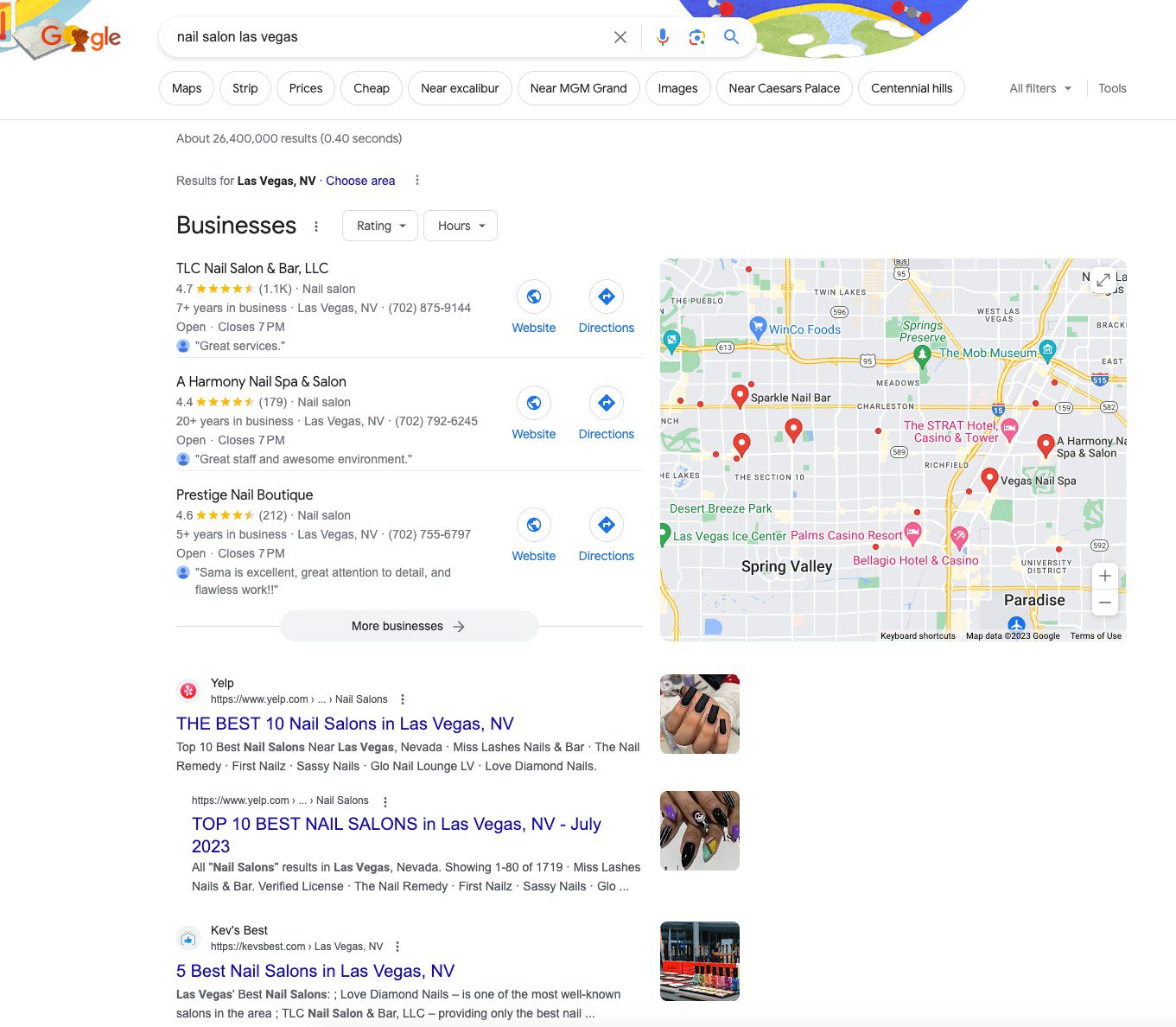
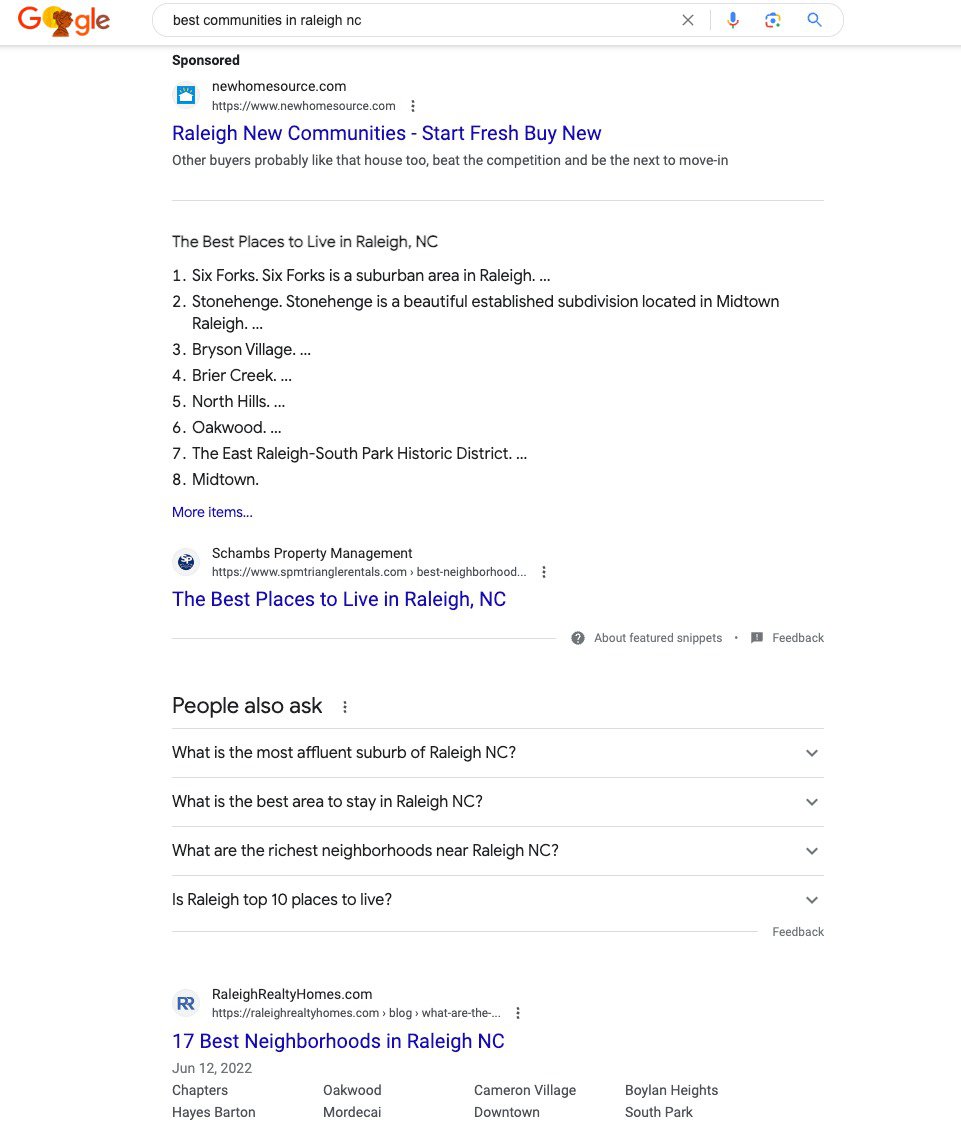
Why use SERP volatility sensors?
Why use SERP volatility sensors?
Let’s explore some of the ways SERP volatility reports come in handy, with examples.
SERP volatility reports can be useful for keeping ahead of Google algorithm changes. For many SEO investors, this can be a stressor. In this article, we’ll talk about why you should use volatility sensors and provide some examples of how to talk about visibility practically.
Let’s dive in.
Where You’ve Heard of SERP Volatility
Perhaps you’ve seen screenshots about “SERP volatility” in your SEO research, and you want to understand why it’s a topic of conversation.

According to Semrush, “The Semrush Sensor tracks volatility of Google’s SERPs based on daily changes in rankings to monitor any signs that could indicate an update to Google’s algorithm. Since Google updates its ranking algorithm often, their results pages can change all the time. By letting this tool monitor Google’s behavior for you, you can determine if the industries you operate in are more or less susceptible to change compared to the rest of Google’s search results.”
Semrush isn’t the only tracker for SERP volatility, but for the purposes of this topic, they’re going to be the primary tool we’ll talk about.
What is the purpose of the SERP volatility sensor?
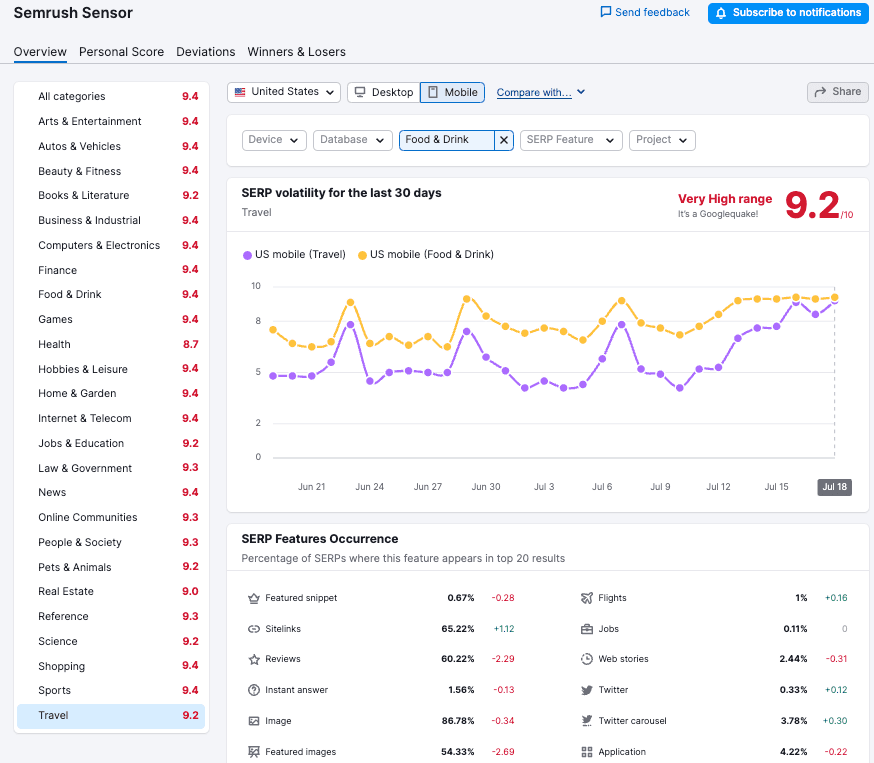
Very simply, volatility sensors help us see when there are fluctuations in rankings in search results pages.
These plot charts can help us learn more about what Google does in real-time. Many times, they prepare us for a Google update, and we know to expect changes and fluctuations across rankings and, therefore, visibility, traffic, and average position.
As is the case now, sometimes these changes are across all search categories, while other times, we’ll see them in specific ones, like Finance and News but not any other category.
Why SERP Volatility Matters
So, why does this matter?
SERP Volatility trackers help us provide context around Google and ranking changes as we see them. Since GSC usually lags a day or two behind, we can closely monitor our websites for changes and act quickly when necessary.
The charts also provide context to stakeholders about what’s happening in search now and can be paired with results changes in other SERP features like People Also Ask, FAQ results, Featured Snippets, etc.
Communication, Troubleshooting, and Analysis
Volatility can be added into reporting for anyone invested in how search results are performing, but especially SEO and content teams.
Using the SERP volatility report within your internal team or as a point of conversation in reporting to stakeholders can be valuable when telling the story of what’s happening now or during the performance time frame.
For example, you can say, “Hey, team – looks like we’re going through a Googlequake right now. Has anyone noticed anything in their client accounts? Perhaps there’s been a boost in Top Stories’ visibility. Let me know!”
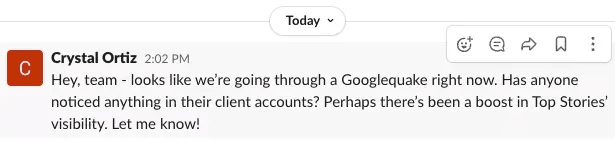
Now your team is aware of a specific action item they can look to, which will come in handy at the end of the reporting period, like this:
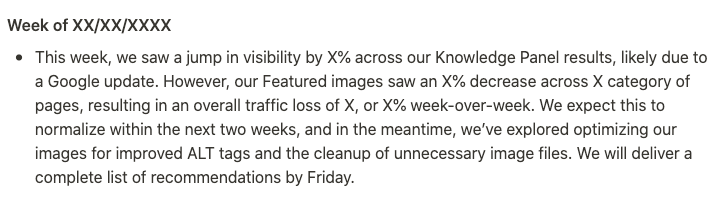
“This week, we saw a jump in visibility by X% across our Knowledge Panel results, likely due to a Google update. However, our Featured images saw an X% decrease across X category of pages, resulting in an overall traffic loss of X, or X% week-over-week. We expect this to normalize within the next two weeks, and in the meantime, we’ve explored optimizing our images for improved ALT tags and the cleanup of unnecessary image files. We will deliver a complete list of recommendations by Friday.”
The example above is just one instance of a volatility report’s usefulness. Volatility reports often come in handy, depending on your organizational role.
Explaining Volatility to Stakeholders
While we’ve just mentioned a specific reporting example above, it may not always be the case where we’re reporting on SERP volatility. This means that stakeholders can go long periods without ever hearing about SERP volatility and how it affects performance. Don’t worry – sometimes, it’s simply not relevant to the conversation and has nothing to do with performance.
Here’s what to keep in mind when discussing volatility with stakeholders.
- Stakeholder time is precious. Don’t waste your time talking about volatility if it has no relevance to performance.
- That said, if volatility can provide context around the data, by all means, use it to demonstrate your point.
- Remember to keep it simple. Simplicity is often underestimated and you will bring a lot more value to your client relationships by explaining things in terms they can understand.
Staying Proactive with SERP Volatility Sensors
Overall, SERP volatility reports are useful under the right circumstances, as they can help us keep an eye on our ranking fluctuations and either predict or troubleshoot Google algorithm changes. They’re also useful when providing context around reporting and keep us invested in our performance regularly.
More useful articles on SERP Volatility:

Crystal Ortiz is an Organic Growth and SEO Consultant. Increase your online visibility and create long-term growth through SEO. Keyword Research, Site Migrations, SEO Audits, Content Strategy, and More.
Contact
Crystal Ortiz is the owner of SOCIALHART LLC. Consulting services provided by Crystal Ortiz are managed through SOCIALHART LLC.